








06 / PRESENCE

What happens when the work shows.

You can look better, feel better, and still carry yourself like the version of you who came before.

Presence is where the way you speak, move, and interact catches up.

A bearded man in a dark blazer and open-collar black shirt sits at a rooftop lounge at dusk with a glass of whisky, listening with a slight smile, the city lit up behind him. An illustrative image.

COMMON PROBLEMS

You look put together.But do you come across that way?

Most men already have some idea of what confidence looks and sounds like. The harder question is whether the way they actually speak, move, and carry themselves supports the impression they mean to make. Why don’t people see me as confident?

  1. 01
    A man in a dark knit sits forward on a sofa with his hands clasped, looking off with a hesitant expression. An illustrative image.

    You look put together, but you still sound unsure.

    You hedge, rush, or trail off even when you know what you mean.

  2. 02
    A man in a dark blazer and open-collar white shirt speaks to a small group at a drinks gathering, hands open. An illustrative image.

    People seem more reserved around you than you expect.

    Conversations stall, reactions go flat, or people give you less back than you think you’re giving them.

  3. 03
    A bearded man in a dark knit sits with his arms crossed on a lounge sofa while a woman talks to him, his expression closed. An illustrative image.

    Your body language is saying something you don’t intend.

    Posture, eye contact, facial expression, or movement can undercut the impression you think you’re making.

  4. 04
    A bearded man in a tweed jacket and tie stands in a small group at a gathering while the people around him look away. An illustrative image.

    The way you used to carry yourself no longer fits.

    What once read as modest or approachable can start to look tentative, aloof, or incongruent once the rest of you is more put together.

HOW MANTH HELPS

Build presence deliberately.

Carter helps you narrow what needs work, suggests drills or practices, and helps you adjust based on what happens when you use them in real life.

  1. An open notebook and pen on a dark desk beside a mug and a lamp. An illustrative image.

    01— ASSESS

    Figure out what is actually happening.

    Voice, pace, expression, posture, eye contact, conversational habits, or something else entirely.

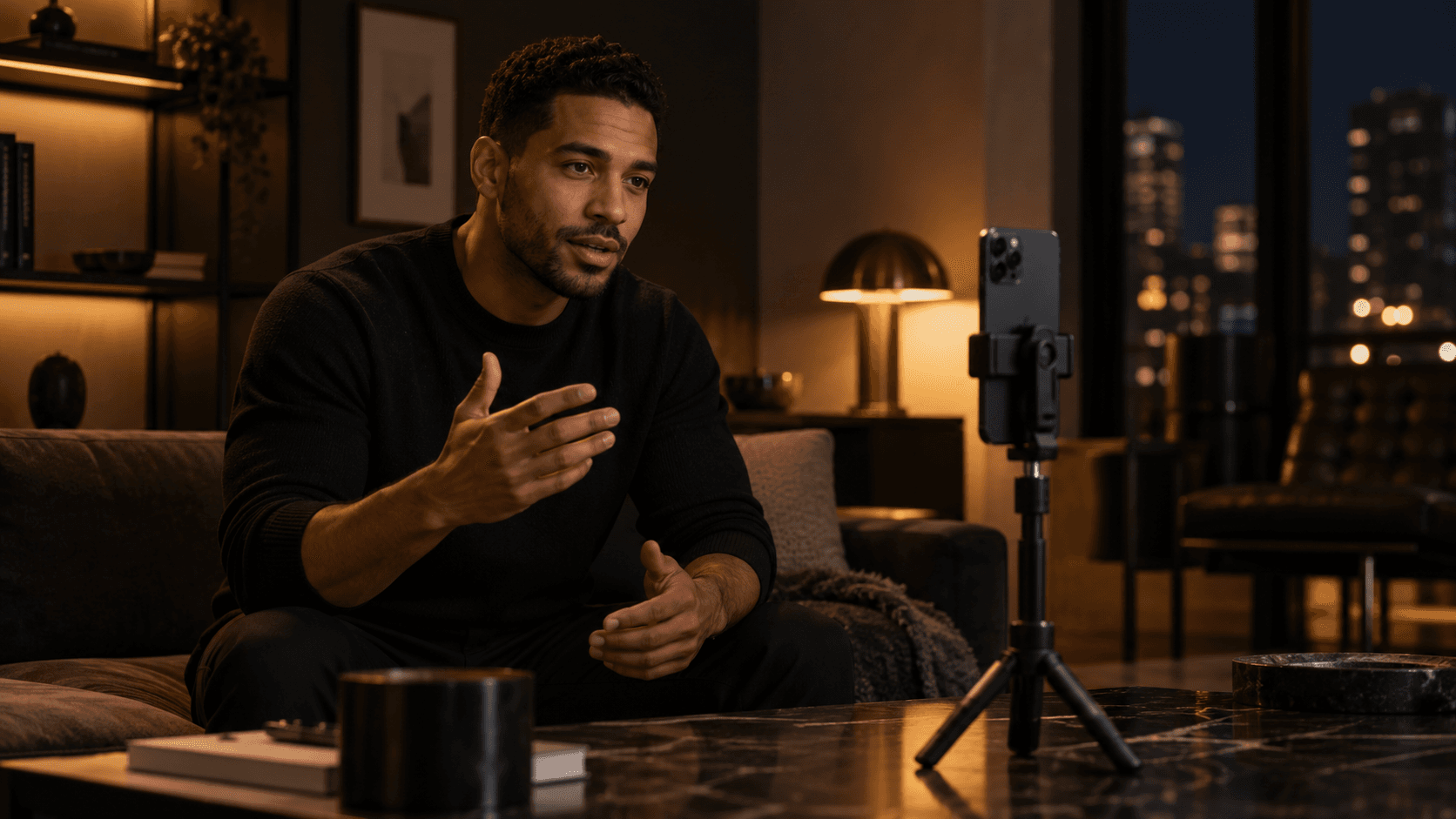
  2. A man in a black sweater sits on a sofa practising a spoken point to a phone on a tripod, one hand raised. An illustrative image.

    02— ISOLATE

    Work on one variable at a time.

    “Be more charismatic” is too vague to practice. A specific weakness is not.

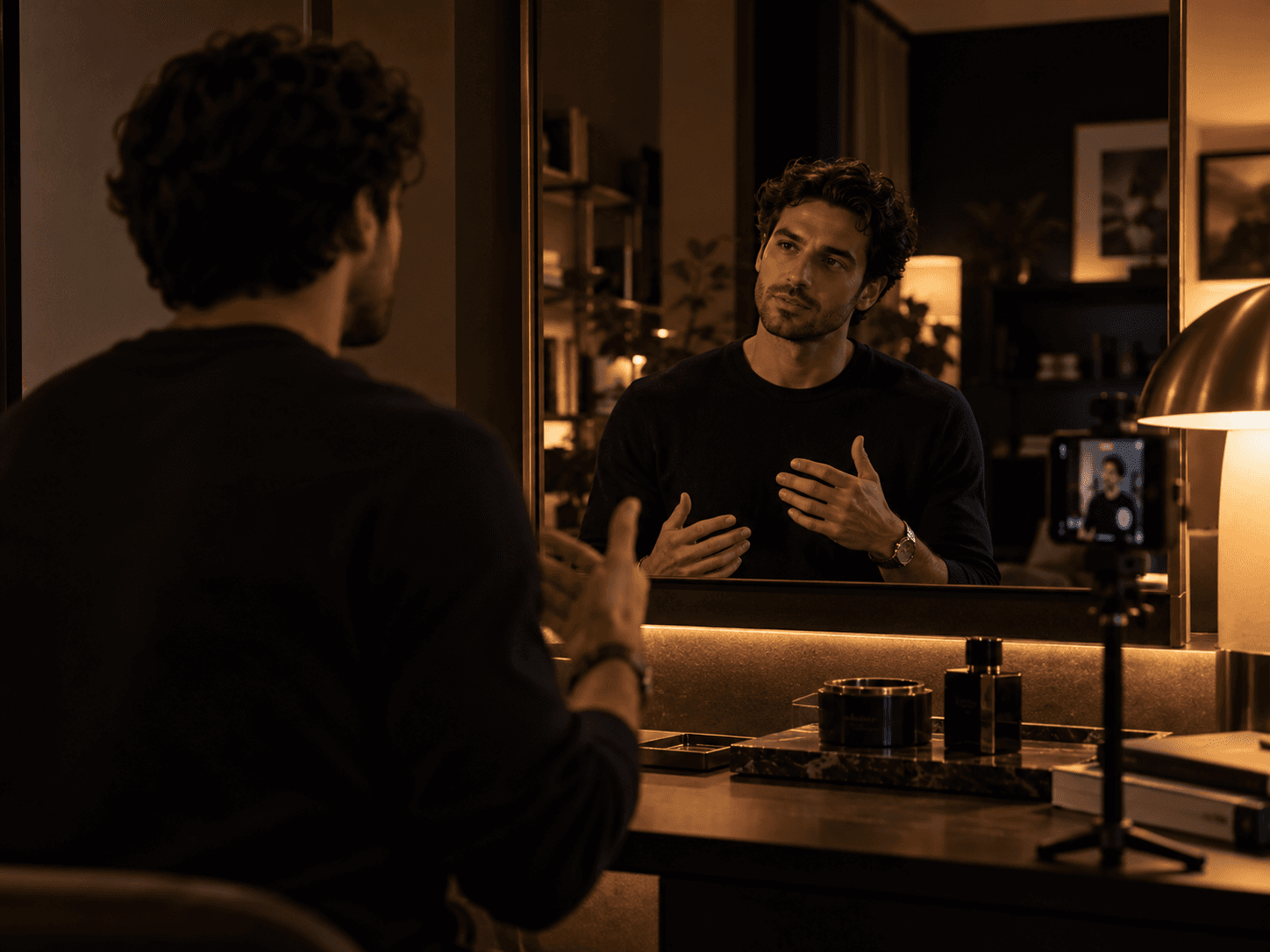
  3. A man practises a spoken delivery in front of a mirror. An illustrative image.

    03— PRACTICE

    Train the skill deliberately.

    Carter suggests drills and repeatable practices for voice, cadence, vocal fluidity, expression, eye contact, posture, body language, and conversational delivery.

  4. A man in a dark jacket speaks at a table in a professional meeting with a city skyline behind him. An illustrative image.

    04— APPLY

    Use it with real people.

    Take the practice into meetings, dates, conversations, presentations, and other situations where presence actually matters.

  5. A laptop showing a message thread beside an open journal and pen on a dark desk. An illustrative image.

    05— REPORT & ADJUST

    Bring the response back.

    Tell Carter what happened, how people responded, what felt different, and what still felt off. Adjust from there.

The goal is not to perform confidence. It is to make what is already there easier to perceive.

WHAT CARTER HELPS YOU WORK ON

What are people actually experiencing?

Presence is not one skill. Carter helps you work through the pieces that shape how you come across.

  • VOICE & DELIVERY

    Tonality, cadence, pace, pauses, volume, projection, and vocal fluidity.

  • EXPRESSION & EYE CONTACT

    Warmth, attentiveness, facial expression, and eye contact.

  • POSTURE & MOVEMENT

    How you stand, sit, walk, gesture, and take up space.

  • BODY LANGUAGE & SOCIAL SIGNALS

    What you may be signaling — and what other people may be signaling back.

  • CONVERSATION & CALIBRATION

    Listening, storytelling, turn-taking, assertiveness, warmth, disagreement, and group dynamics.

WHY IT COMES HERE

More than showing up.

Presence is where you learn to present your best self in real time — how you speak, move, make eye contact, carry a conversation, and handle a room.

But MANTH adds another question:

Does the way you carry yourself still fit the man people now see?

By this point, the rest of the sequence has changed the baseline. Your grooming, body, mindset, and clothes are sending a stronger signal before you speak.

That means some old habits may no longer land the same way.

Sometimes you need more conviction. Sometimes more warmth. Sometimes less apology, less shrinking, less intensity.

Presence is not about performing a personality. It is about learning how to show up at your best — and making sure the signal matches the substance.

Explore the Sequence

MARC’S EXPERIENCE

Knowing the answer and projecting that you know the answer are different skills.

For years, I worked on major transactions with senior people and assumed that if I knew the answer, the work would speak for itself.

It didn’t always.

Marc, in a blue checked suit and white open-collar shirt, standing in front of a wall of dark wooden crates and looking off to the side.

Later, some of the same men who had barely registered me started responding to me differently. I had not suddenly become smarter or more qualified. What changed was how I looked, carried myself, and showed up in the room.

I realized I had literally been carrying myself smaller than I was.

So I treated presence like everything else — something to study, practice, test, and refine. Those lessons became part of Carter.

Make the signal match the substance.

One payment. $249 for six months of MANTH access. No subscription. No automatic renewal. 30-day money-back guarantee.