THE PROBLEMS · 04
You’re competent, but people don’t feel it.
You know what you’re doing. You have the experience. You understand the work. When there is a difficult problem, you may be one of the people others rely on to solve it.
But that does not guarantee that people experience you as confident, authoritative or senior.
Competence is what you can do. Presence affects whether other people can perceive it.
That gap can matter in a meeting, an interview, a presentation, a negotiation, and outside work too.

Competence isn’t self-evident
People do not have direct access to your ability. They infer it, and those inferences begin quickly.
A foundational meta-analysis of “thin-slice” judgments found that relatively brief observations of expressive behavior could predict a range of interpersonal outcomes, and extending observation from under 30 seconds to several minutes did not necessarily improve predictive accuracy. [1] That does not mean someone can accurately determine everything about you in seconds. It means brief behavior carries enough information to shape consequential judgments.
Other research has found that social judgments organize strongly around two broad dimensions: warmth and competence: roughly, what someone thinks your intentions are and whether you appear capable of acting on them. [2]
So the issue is not simply whether you possess competence. It is what evidence of that competence reaches the other person.
Your words matter. So do your voice, timing, eye contact, expression, physical stillness, responsiveness and the degree of certainty with which you communicate.

Five reasons people may not feel your competence
Your voice is understating the message.
The same idea can land differently depending on whether someone reads it or hears the person saying it. In a series of experiments involving ordinary evaluators and professional recruiters, job candidates were rated as more intelligent, thoughtful and appealing when evaluators heard their voices than when they read the same words. Adding video did not produce the same additional benefit. [3] Other experimental work has found that speech rate, intonation and pitch can affect how confident a speaker sounds and, in some circumstances, how persuasive the speaker is. [4] Another study found that listeners preferred lower-pitched versions of the same voices in hypothetical elections. [5] Lower pitch can influence perception. It does not make someone more competent. In practice, a strong answer can still sound uncertain when it is too quiet, rushed through, trails off at the end or carries the vocal shape of a question when the speaker intends a statement. The job is to make the voice support the message.
Your nonverbal behavior is saying something else.
People are not evaluating your sentences in isolation. They also see whether you look at them, what your face is doing, whether your body appears settled or restless, and whether your physical behavior matches the certainty of your words. A meta-analysis of 63 job-interview studies involving 4,868 participants found that professional appearance, eye contact and head movement were among the nonverbal cues most strongly associated with interview performance. [6] The study also found evidence that some of these judgments can reflect bias. That matters because nonverbal cues are signals, not objective measurements of ability. Constant fidgeting, disappearing eye contact, collapsed posture, a frozen expression or nervous smiling can add messages you never intended to send. You do not need to choreograph every movement. You need to remove the behaviors that distract from the point.
You are optimizing for being correct instead of being clear.
Competent people often know more about a subject than the person listening to them. That creates a strange failure mode. You see the exceptions. You know where the uncertainty lives. You can think of six qualifications before the other person has finished processing the first point, so you communicate all six. The result can sound less confident than a simpler answer from someone who understands less. The fix is hierarchy: lead with the answer, explain the reasoning, then qualify it where the qualification changes the decision. People should not have to excavate your recommendation from your analysis.
You sound less sure than you actually are.
Actual confidence and projected confidence are not identical. Research on overconfidence found that people could gain social status partly because their behavior caused others to perceive them as more competent. [7] That is not a recommendation to become overconfident. It shows that people respond to signals associated with confidence in addition to underlying ability. A conscientious person can create the opposite problem. You hedge because you are precise, soften because you do not want to overstate, and preface the answer because you can imagine being wrong. Used constantly, those habits can make you sound less sure than you actually are. There is a real difference between saying: “I’m not sure.” and saying: “Here’s my view. The part I’m less certain about is X.”
You have competence without enough warmth, or warmth without enough authority.
Presence is not just dominance. Research on social perception repeatedly finds warmth and competence functioning as fundamental dimensions in how people evaluate others. [2] Someone can look capable and still be difficult to trust. Someone else can be personable and still fail to register as authoritative. Professionally, the goal is rarely just: He knows what he’s doing. You may also need people to think: I believe him. I can work with him. I want him in the room. I trust him with the decision. For some men, the adjustment is more firmness. For others, it is more responsiveness. Someone who already sounds forceful may gain more from listening and acknowledging an objection than from trying to sound even more powerful.
Why Presence comes last in MANTH
The strongest signal in that interview research was not eye contact. It was professional appearance. [6] That matters because Presence does not begin from zero.
By the time you reach the final pillar of MANTH, grooming, fitness, nutrition, mindset and style have already changed what people see before you speak. Your skin, body composition, posture, clothes and comfort in your own appearance are already sending information.
Presence is the last step because it is where the rest of the work becomes easier to carry. A man who looks healthier, dresses with intention and feels more comfortable in his own skin still has to speak, listen, make decisions and hold attention.
The earlier pillars change the signal. Presence teaches you how to transmit it.
- 01GROOMING
- 02FITNESS
- 03NUTRITION
- 04MINDSET
- 05STYLE
- 06PRESENCE
What most men try first
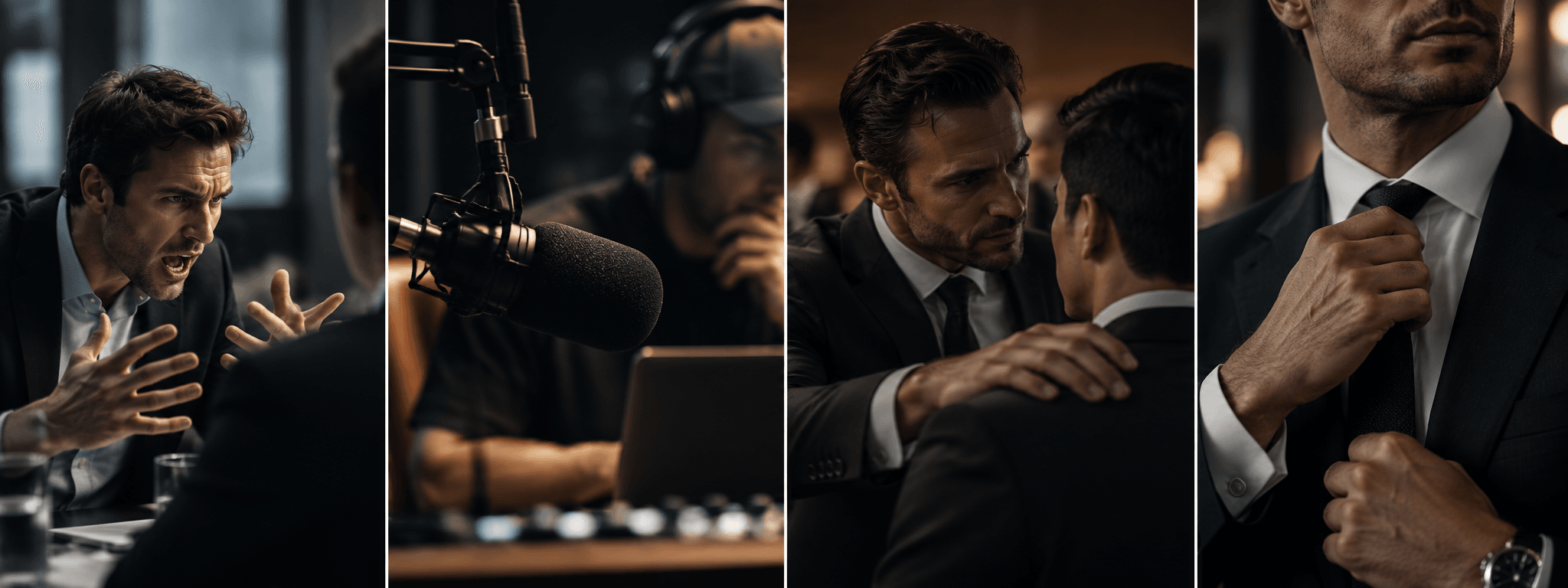
SPEAKING LOUDER
More volume can help when nervousness is making your voice disappear, and some speaking coaches deliberately use increased volume as a practical exercise.
But volume alone does not fix rushed delivery, unclear thinking or chronic hesitation.
ACTING MORE DOMINANT
More interruption and more certainty are not automatically more presence.
Sometimes they just make you harder to work with.
COPYING A CHARISMATIC PERSON
Presence is not an impersonation exercise.
If the behavior does not fit your temperament or context, people can feel the performance.
What I got wrong
Marc Collier is the founder of MANTH and the first person to work through the system that became the MANTH Sequence.
For years, I assumed competence would eventually speak for itself. I was often the lawyer leading document issues-list calls. I knew the agreement, understood the issue and usually had a recommendation. But I would still say things like, “I don’t know what the partner thinks, but…” or give my answer and then wait for the partner to confirm it.
Sometimes the client did the same thing. I would answer the question, and the room would still wait for the partner, even when the partner had already made clear that I was closer to the details of the deal.
One performance review captured the contradiction pretty cleanly: I usually knew the answer, but I needed to speak up more. The problem was not my technical ability. I was communicating my competence as though it still required someone else’s approval.
What changed was not that I became the loudest person in the room. I became more deliberate in how I occupied it: steadier eye contact, less hedging, fewer unnecessary qualifiers, more control over my voice and pace, and less instinct to seek someone else’s approval after I spoke. Taken together, those changes created something I had not projected before. People seemed more inclined to notice me, engage me, and treat me as someone worth listening to.
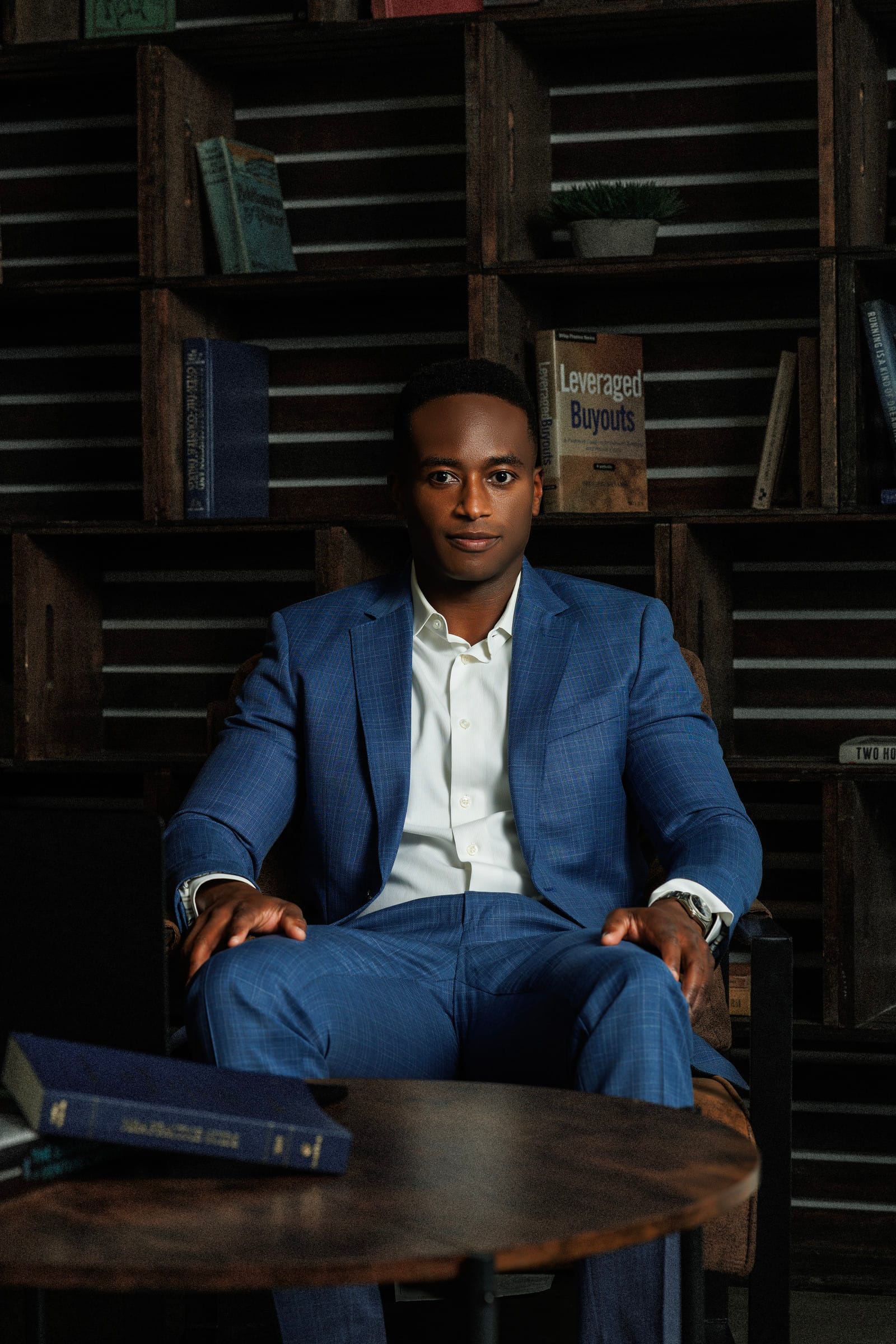
Once I started working deliberately on presence, I began noticing the change outside work.
Older men in my life who had barely registered me before started paying more attention when I was out in public. One of the clearest examples involved a prominent client I had represented on a deal. I had been to his house, but when I later saw him at several professional events, he barely acknowledged me. After I had gone through much of my own transformation, I saw him again at a public event. This time, while he was talking with NBA players, he repeatedly looked over at me as I walked past. I read it as an opening to speak to him; whether that was actually his intention, the change in how much attention I was receiving was hard for me to miss.
I noticed something similar with younger men I did not know. Walking around in public, guys increasingly started approaching me, asking questions or striking up conversations.
None of that proves some scientific before-and-after effect. It was simply part of what made the lesson concrete for me: people were responding differently before I ever explained who I was or what I had done.
For years, I assumed competence would eventually speak for itself. I was often the lawyer leading document issues-list calls. I knew the agreement, understood the issue and usually had a recommendation. But I would still say things like, “I don’t know what the partner thinks, but…” or give my answer and then wait for the partner to confirm it.
Sometimes the client did the same thing. I would answer the question, and the room would still wait for the partner, even when the partner had already made clear that I was closer to the details of the deal.
One performance review captured the contradiction pretty cleanly: I usually knew the answer, but I needed to speak up more. The problem was not my technical ability. I was communicating my competence as though it still required someone else’s approval.
What changed was not that I became the loudest person in the room. I became more deliberate in how I occupied it: steadier eye contact, less hedging, fewer unnecessary qualifiers, more control over my voice and pace, and less instinct to seek someone else’s approval after I spoke. Taken together, those changes created something I had not projected before. People seemed more inclined to notice me, engage me, and treat me as someone worth listening to.
Once I started working deliberately on presence, I began noticing the change outside work.
Older men in my life who had barely registered me before started paying more attention when I was out in public. One of the clearest examples involved a prominent client I had represented on a deal. I had been to his house, but when I later saw him at several professional events, he barely acknowledged me. After I had gone through much of my own transformation, I saw him again at a public event. This time, while he was talking with NBA players, he repeatedly looked over at me as I walked past. I read it as an opening to speak to him; whether that was actually his intention, the change in how much attention I was receiving was hard for me to miss.
I noticed something similar with younger men I did not know. Walking around in public, guys increasingly started approaching me, asking questions or striking up conversations.
None of that proves some scientific before-and-after effect. It was simply part of what made the lesson concrete for me: people were responding differently before I ever explained who I was or what I had done.
What to fix first
Do not begin with “be more confident.” Identify what people are actually receiving.
After a meeting, presentation or conversation, ask: Did I speak too quickly? Did my volume disappear? Did I qualify an answer that did not need qualifying? Did I avoid eye contact when making the important point? Did I fill every silence? Did I sound warm but tentative, or certain but closed off?
You need to know which signal is breaking before you train it.
Start with something observable:
- pace
- volume
- sentence endings
- pauses
- pitch variation
- filler words
Research supports the broader point that vocal features affect perceptions of confidence and competence. [3][4][5]
If you rush, slow the first sentence. If you trail off, finish declarative sentences. If you sound monotone, emphasize the word carrying the meaning.
Train one thing until it stops requiring conscious effort.
Once Carter, MANTH’s AI personal development coach, identifies the variable that is actually getting in the way, practice that issue directly instead of running the same drill for everyone. Carter may use MANTH’s named drills to target the specific issue—for example, First Mover for weak openings, Statements Not Questions for turning recommendations into questions, Let It Land for over-explaining or softening the point, and Lens Lock for drifting eye contact.
The drill should follow the diagnosis.
A useful professional structure is: Here’s what I think. Here’s why. Here’s the risk. Here’s what I recommend we do.
Start with the conclusion. Add the nuance after the other person knows where you stand.
Give the update in the smaller meeting. Ask the question. Deliver the recommendation without the three qualifying sentences. Practice the answer before the presentation.
Presence is behavioral. Repetition matters. If the behavior only appears when you consciously perform it during a high-stakes moment, it is not yet how you naturally communicate.
What Carter does with this
Carter, MANTH’s AI personal development coach, does not start by telling you to “be more confident.” He starts by figuring out where the signal is breaking down. Then you can practice it. The goal is to turn presence into observable behavior you can work on repeatedly.
In MANTH, this is the work of Presence, the sixth area.
FIND THE PROBLEM
Carter starts with diagnostic questions about where your presence tends to break down: meetings, presentations, conversations, voice, eye contact, hedging, posture, and other recurring situations. He then helps you identify the issues that are likely doing the most damage.
REVIEW WHAT YOU SAID
You can paste in what you said or provide a transcript. Carter can point out hedging, filler language, qualifiers, weak openings, or places where your structure became less clear.
“I think maybe we should…”
PRACTICE THE FIX
Once you know what to work on, Carter can walk you through specific drills and behaviors so you can practice one variable at a time.
- First Mover
- Statements Not Questions
- Let It Land
- Lens Lock
Presence has limits.
PRESENCE ≠ CONVENTIONAL CHARISMA
When most people hear “charisma,” they picture someone highly expressive, gregarious and socially magnetic, a Dwayne Johnson type of presence. That is not what we mean here. You can project presence without becoming louder, more extroverted or theatrically charismatic.
Charisma can involve values, emotion and symbolism; research has also shown that some charismatic communication behaviors can be taught. [8][9]
PRESENCE
clarity + composure
can be quiet
makes competence easier to perceive
CONVENTIONAL CHARISMA
highly expressive
socially magnetic
often gregarious
WHEN PRESENCE ISN’T THE PROBLEM
Not every problem is a presence problem: you can communicate clearly and still be underestimated or overlooked.
Sometimes the underlying competence or preparation genuinely needs work. If you cannot answer the question, work on the substance. If you consistently miss deadlines, fail to make decisions or need other people to rescue your work, stronger eye contact will not solve the underlying issue.
Politics, culture, poor management or organizational dynamics can distort how competence is recognized, and entrenched perceptions can affect who is heard, trusted and promoted.
People may be reacting to bias, prior impressions or an established reputation that better presence will not immediately erase. Research on employment interviews itself shows that the nonverbal cues people reward can interact with stereotypes and other biases. [6]
You cannot control all of that. You can control more of your own signal.
Your competence should be easier to perceive.
MANTH helps you identify where confidence is getting lost (in your voice, delivery, body language, framing or interaction style) and gives you specific ways to work on it.
Common questions
Presence is not one scientifically agreed-upon trait.
For MANTH, it means the behaviors that affect how clearly other people experience qualities you already possess: confidence, competence, composure, warmth, authority and attentiveness.
The label itself is broad. The underlying mechanisms are real.
Research shows that people form consequential judgments from brief behavior [1], commonly evaluate others in terms of warmth and competence [2], respond differently to spoken versus written communication [3], infer confidence from vocal properties [4], and use nonverbal cues in professional evaluations. [6]
Working on those observable components is more useful than chasing an abstract idea of “executive presence.”
Not necessarily, but pitch can affect perception.
Experiments show that pitch, intonation and speech rate can affect perceived vocal confidence [4], and one study found that listeners preferred lower-pitched versions of the same voices in hypothetical elections. [5]
There is no universal “best” pitch. Pace, sentence endings, volume, pauses, resonance and variation all matter.
Yes, but context matters.
Eye contact was among the nonverbal cues most strongly associated with interview performance in a large meta-analysis. [6]
But more is not always better. One experiment found that when listeners already disagreed with a speaker, direct eye contact made them less persuaded. [10]
The goal is attentive, context-appropriate eye contact, not staring.
Many parts of it can.
Speech behavior, pacing, framing, eye contact, listening behavior and presentation habits can all be practiced. Experimental work has even found that training specific charismatic communication behaviors can increase later observer ratings. [9]
You do not need to become a different personality.
You need repeatable behaviors that make more of your competence visible.
Sources
01 · Ambady & Rosenthal · 1992Thin Slices of Expressive Behavior as Predictors of Interpersonal Consequences
Ambady N, Rosenthal R. “Thin Slices of Expressive Behavior as Predictors of Interpersonal Consequences: A Meta-Analysis.” Psychological Bulletin. 1992;111(2):256–274. DOI: 10.1037/0033-2909.111.2.25602 · Fiske, Cuddy & Glick · 2007Universal Dimensions of Social Cognition: Warmth and Competence
Fiske ST, Cuddy AJC, Glick P. “Universal Dimensions of Social Cognition: Warmth and Competence.” Trends in Cognitive Sciences. 2007;11(2):77–83. DOI: 10.1016/j.tics.2006.11.00503 · Schroeder & Epley · 2015The Sound of Intellect: Speech Reveals a Thoughtful Mind
Schroeder J, Epley N. “The Sound of Intellect: Speech Reveals a Thoughtful Mind, Increasing a Job Candidate’s Appeal.” Psychological Science. 2015;26(6):877–891. DOI: 10.1177/095679761557290604 · Guyer et al. · 2019Speech Rate, Intonation, and Pitch: Bias and Cue Effects of Vocal Confidence
Guyer JJ, Fabrigar LR, Vaughan-Johnston TI. “Speech Rate, Intonation, and Pitch: Investigating the Bias and Cue Effects of Vocal Confidence on Persuasion.” Personality and Social Psychology Bulletin. 2019;45(3):389–405. DOI: 10.1177/014616721878780505 · Klofstad, Anderson & Peters · 2012Sounds Like a Winner: Voice Pitch Influences Perception of Leadership Capacity in Both Men and Women
Klofstad CA, Anderson RC, Peters S. “Sounds Like a Winner: Voice Pitch Influences Perception of Leadership Capacity in Both Men and Women.” Proceedings of the Royal Society B. 2012. DOI: 10.1098/rspb.2012.0311
06 · Martín-Raugh et al. · 2023Speaking Without Words: Nonverbal Cues in Job Interviews
Martín-Raugh MP, Kell HJ, Randall JG, Anguiano-Carrasco C, Banfi JT. “Speaking Without Words: A Meta-Analysis of Over 70 Years of Research on the Power of Nonverbal Cues in Job Interviews.” Journal of Organizational Behavior. 2023;44(1):132–156. DOI: 10.1002/job.267007 · Anderson et al. · 2012A Status-Enhancement Account of Overconfidence
Anderson C, Brion S, Moore DA, Kennedy JA. “A Status-Enhancement Account of Overconfidence.” Journal of Personality and Social Psychology. 2012;103(4):718–735. DOI: 10.1037/a002939508 · Antonakis et al. · 2016Charisma: An Ill-Defined and Ill-Measured Gift
Antonakis J, Bastardoz N, Jacquart P, Shamir B. “Charisma: An Ill-Defined and Ill-Measured Gift.” Annual Review of Organizational Psychology and Organizational Behavior. 2016;3:293–319. DOI: 10.1146/annurev-orgpsych-041015-06230509 · Antonakis et al. · 2011Can Charisma Be Taught? Tests of Two Interventions
Antonakis J, Fenley M, Liechti S. “Can Charisma Be Taught? Tests of Two Interventions.” Academy of Management Learning & Education. 2011;10(3):374–396. DOI: 10.5465/amle.2010.001210 · Chen et al. · 2013In the Eye of the Beholder: Eye Contact Increases Resistance to Persuasion
Chen FS, Minson JA, Schöne M, Heinrichs M. “In the Eye of the Beholder: Eye Contact Increases Resistance to Persuasion.” Psychological Science. 2013;24(11):2254–2261. https://www.hks.harvard.edu/publications/eye-beholder-eye-contact-increases-resistance-persuasion